A while back I wrote a three-part series on the psychology behind social engineering. Authority. Urgency. Trust. Fear. Reciprocity. Social proof. The neurological mechanisms that make manipulation work before conscious thought gets involved.
This post isn’t a direct continuation of that series. But it sits in the same space.
I was reading a piece on scarcity psychology recently - how unavailability creates desire, how restriction manufactures wanting, how the brain treats rare as valuable before reasoning gets a vote. The piece was about dating and career ambition. Halfway through I stopped thinking about either of those things and started thinking about phishing emails.
Because every mechanism it describes maps directly onto how social engineering attacks are designed. And scarcity specifically - the psychology of “you can’t have this” - is one of the most underanalyzed triggers in the space.
This is that analysis.
What Scarcity Actually Does
Most people think scarcity just creates urgency. It does more than that.
Urgency pressures you to act fast. Scarcity changes what you want before you act.
That’s a meaningful distinction. Urgency attacks your timing. Scarcity attacks your perception.
When something becomes scarce, your brain assigns it value it didn’t have before. The mechanism is ancient: for most of human history, if something was rare and others were competing for it, that meant it mattered. Food shortages. Mating competition. Resource access. Scarcity reliably signalled survival value.
Your brain still runs this logic in 2026. It just runs it on credential-harvesting pages and phishing campaigns instead of food supplies.
And here’s the critical detail: the perceived value installs before reasoning gets involved. By the time you’re consciously evaluating whether something is worth acting on, the scarcity signal has already told your brain it’s important. You’re not making a fresh decision. You’re rationalizing a perception that was already formed.
That’s what makes scarcity more dangerous than most social engineering triggers.
Reactance: Why Restriction Creates Wanting
Ixcarus covers reactance theory in the context of dating. When someone feels their freedom is being restricted, they experience a motivational state that pushes them to reclaim whatever they feel they’re losing.
In cybersecurity, this shows up constantly.
“Your account access has been suspended.”
Before that message arrived, you probably weren’t thinking about your account. You weren’t particularly attached to it. It was just there.
The moment access is threatened, everything changes. Your brain registers restriction as a threat to autonomy. The response is immediate: reclaim what’s being taken. Act before the window closes.
The attacker didn’t give you something valuable. They took something away. And the taking created the wanting.
This is why account suspension phishing works at an alarming rate even on people who know better. The message doesn’t just create urgency. It creates reactance. A psychological state where the drive to restore access overrides the instinct to verify whether the threat is real.
You weren’t trying to protect something important. You were trying to reclaim something your brain suddenly decided was important because someone else threatened to take it.
The restriction manufactured the value.
How Attackers Engineer Scarcity
There are four main types of engineered scarcity in attack design. Each one exploits the same underlying mechanism with different framing.
Time-based scarcity
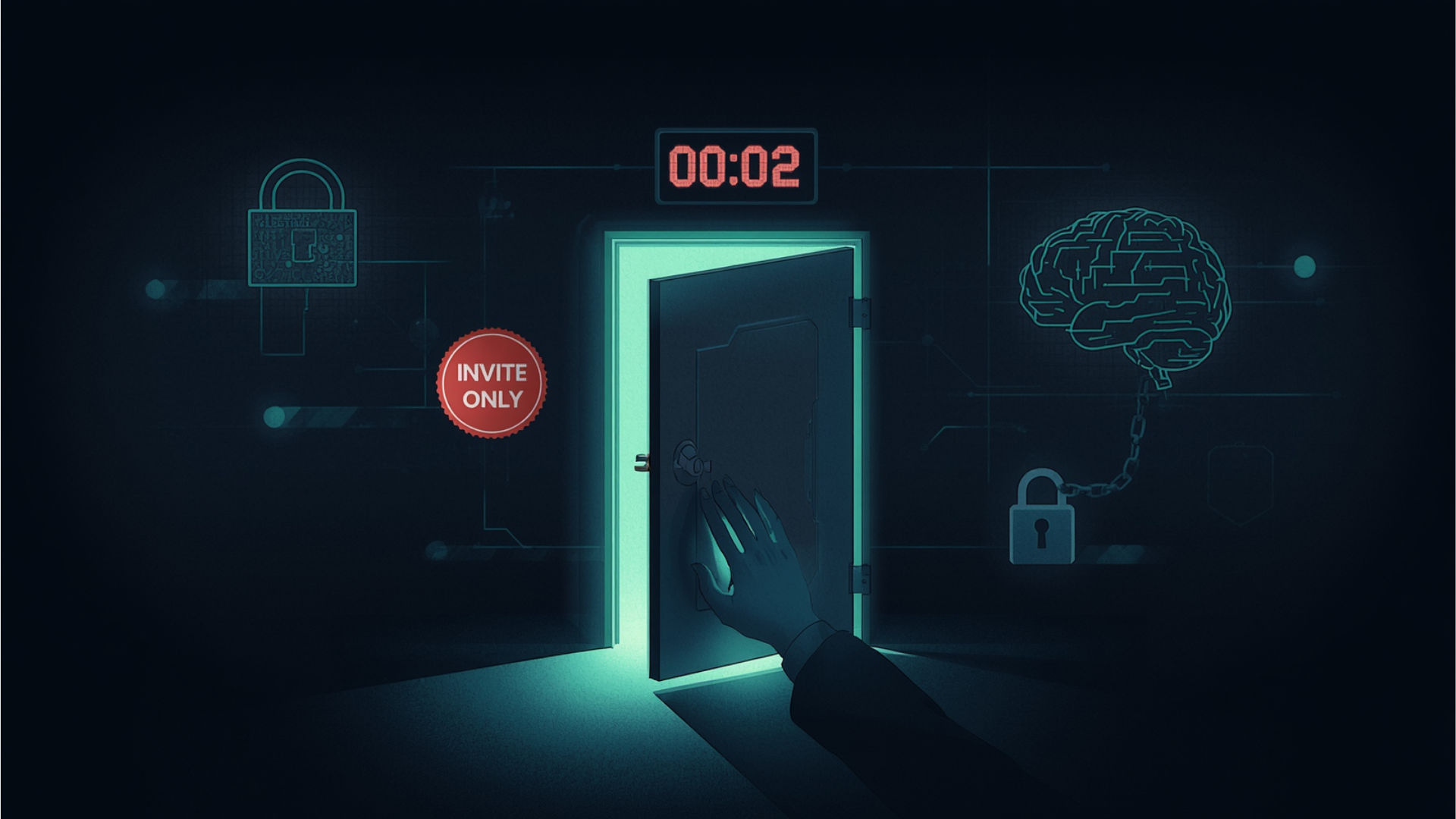
“Your session expires in 15 minutes.” “Complete verification before your account is permanently deleted.” “This offer is only available for the next 30 minutes.”
The ticking clock combines scarcity with urgency. The restricted window makes the thing feel valuable and the deadline forces action before reasoning can catch up.
Legitimate systems use time-based mechanics too. That’s the point. Attackers design scarcity that looks exactly like real constraints because real constraints trigger the same psychological response.
Quantity-based scarcity
“Only 2 remaining.” “Limited to the first 50 respondents.” “This access token was generated specifically for you.”
Social proof and scarcity compound here. If only a few people can have this, then having it means something. Your brain runs competition logic even when there’s no actual competition. The numbers are manufactured. The scarcity is fictional. The psychological response is real.
Exclusivity-based scarcity
This is where reactance theory gets weaponized most elegantly.
Invite-only threat intelligence feeds that harvest credentials. “Private” Telegram groups for security professionals that are actually social engineering traps. Exclusive webinars requiring account access. Closed beta access to tools that don’t exist.
The framing does the work. Invite-only implies someone decided you were worth inviting. That social signal inflates the perceived value of what’s behind the door before you’ve even seen it.
When something is framed as restricted, forbidden, or exclusive, your brain registers two things simultaneously: this is dangerous, and powerful people don’t want you to have it. That framing alone drives action that cold requests never would.
Access restriction scarcity
Suspension emails. Security alerts. Unusual activity notifications. MFA failures. Password reset requirements.
All of these take something you already have and threaten to remove it. That’s reactance at scale. You weren’t thinking about the account before. The moment access is threatened, it becomes the most important thing in the room.
Unlike quantity or exclusivity scarcity, access restriction scarcity is personal. It’s your access. Your account. Your credentials. The brain responds to personal threat faster than abstract opportunity.
The Dopamine Problem
Ixcarus makes a point about dopamine that translates cleanly into security contexts: dopamine is not the pleasure chemical. It’s the anticipation chemical. The brain gets more neurochemically activated chasing unpredictable rewards than receiving guaranteed ones.
Variable rewards are more addictive than consistent ones. Slot machines operate on this. So does social media. And so do certain attack patterns.
Consider phishing campaigns designed for repeated engagement rather than one-shot conversion. An attacker who sends you a suspicious email that turns out to be legitimate three times, then uses the fourth interaction to harvest credentials, has trained your nervous system on a variable reward pattern. The first three interactions installed trust. The fourth exploited it.
Or think about social engineering relationships built over time. An attacker who engages with you on LinkedIn for weeks, provides genuinely useful information twice, then makes a suspicious request on the third contact has created a pattern your brain will interpret as reliable. The unpredictability of when value appears keeps you engaged. By the time the request arrives, your nervous system is activated and the perceived relationship is real.
The variable reward pattern isn’t just manipulation. It’s neurological conditioning. And most security training doesn’t address it because it plays out over weeks, not minutes.
Why Defenders Get This Wrong
Security training addresses urgency well. Slow down. Verify. Don’t act fast on unexpected requests.
But scarcity isn’t just urgency. And treating it like urgency misses the deeper problem.
When urgency is the trigger, the defense is simple in theory: pause the action, break the time pressure, restore analytical thinking.
When scarcity is the trigger, pausing isn’t enough. Because the perception shift already happened. Your brain has already assigned value to the thing being threatened or restricted. You’re not just rushed - you’re wanting something you didn’t want five minutes ago.
Telling someone to “slow down and verify” when their account appears suspended doesn’t address why they suddenly care so much about that account. The scarcity signal already did its work. The verification happens under the influence of manufactured desire, not as a neutral evaluation.
The better defense mechanism: recognize when you want something you didn’t want before it became scarce. That shift in perceived value is the signal.
“Did I care about this access before this email arrived? Was this account important to me five minutes ago? Do I actually want what’s behind this invite-only door, or does it feel valuable because access is restricted?”
Real scarcity survives that question. Engineered scarcity usually doesn’t.
Recognizing Engineered Scarcity
The test is simple: is the desire for this thing real, or was it manufactured by restriction?
Before the suspension email: did you care about this account? Before the invite-only link: did you want access to this tool? Before the ticking clock: were you in the process of doing this already?
If the answer is no, the scarcity is doing the work. Not the value of the thing itself.
Attackers manufacture the wanting. The thing they’re offering - the access, the opportunity, the exclusive resource - is either worthless or doesn’t exist. The scarcity is the product. Once you feel the pull, the phishing page or the credential form or the malicious download is just the mechanism for capturing what the psychology already built.
The card was always the same card. What changed was how the brain was primed to see it.
The Takeaway
Urgency is a trigger. Scarcity is a state.
Urgency tells you to act fast. Scarcity tells you this matters before you’ve decided whether it does.
The attacks that exploit scarcity aren’t the ones that create obvious pressure. They’re the ones that make you feel like you’re about to lose something real, miss something rare, or get locked out of something that was quietly important all along.
The perception installs first. The rationalization follows. And by the time you’re consciously thinking about whether to act, the scarcity has already done most of the work.
Most security training teaches people to slow down. That’s necessary but incomplete.
The fuller defense is understanding what scarcity does to perception before the decision to act even exists. Because you can’t reason your way out of a desire that installed before reasoning got a chance to weigh in.
You can only learn to recognize it.